
Listen & subscribe on Apple Podcasts, Spotify and more.
Season 7 / Episode 2 / 33:55
From distressed assets to destination offices with Nick Bakish | Partner | Group RMC
Transcript
DA: Welcome to TEN, the Tenant Experience Network. I’m your host, David Abrams and in each episode, we bring you conversations with leading CRE industry professionals and experts who all have something to say about tenant experience and the future of the workplace. In today’s episode, Nick Bakish, partner at GroupRMC, joined me for a conversation that spans the full arc of modern commercial real estate, from distressed assets and creative capital strategy to the rising imperative of hospitality-driven tenant experience. Nick shares how the hybrid work era is reshaping office demand, why spec suites and flex spaces have become essential tools, and how urban cores are increasingly favoring mixed-use, experience-first environments over the traditional long-term suburban lease. We dig into what it really means to bring hospitality into commercial real estate, not as a nice-to-have, but as a table stakes differentiator, and how owners are now using proprietary technology, real-time data, and consistent branding across their portfolio to measure and improve the tenant experience at scale. If you’re thinking about the future of office and what it takes to attract and keep tenants in a world where experience is the product, this episode is for you.Let’s get into it.
And now I’d like to welcome Nick to the show. I am really glad you could be with us today, and I’m so looking forward to the conversation. How are you?
NB: Great to reconnect, David. It’s exciting to be here and looking forward to the show.
DA: Awesome. Awesome. Let’s dive in. My favorite question, right at the beginning, love to hear about your path to commercial real estate, how you got started, and really specifically, you know, what prepared you for this role and what you do in your business would love to hear about that.
Read more
NB: Yeah, sales is what prepared me, because you have to be very dogmatic and very disciplined. So I started financial services in the sales side, raising capital for financial planning, basically. Essentially, mutual funds and insurance products and I grew my own business, so I learned that it’s really about persistence and creating value by being able to build relationships and give good quality advice and evolve over time with things that change. So I would say that would be a good preparation for what we’re facing right now in the world of office.
DA: Yeah, right. So tell me more about the business today. Tell me about RMC. What’s the core part? How does the business work? And you’ve scaled, you’ve grown, you’ve got a 22 million square foot portfolio across, I think, 14 states. Tell me what that journey looked like.
NB: Yeah, I kind of call it an overnight success story that took four decades. So it started with a few families out of Montreal where, you know, we would do co-investments together. And I was fortunate to have the right mentor in the business who learned at a different type of time than when I came in. So his name was Ray Massa, which is the RM of RMC. He had originally started not in the commercial side, but in the residential side. But it was different times in the savings alliance crisis of Texas buying off the Resolution Trust Corporation and that was an important lesson that it’s not necessarily always about buying things that are distressed, but if you can buy from groups that are distressed by how things are performing, it’s a different story. So as they built up a nice portfolio of cash flowing assets, it created a lot of wealth and that eventually got sold to Equity Residential, the late great Sam Zell. And that was the genesis where we had our own unique opportunity in the referendum of Quebec. I graduated from McGill and a lot of capital was leaving and there were still assets that were performing. And at that point, it moved from residential to industrial. I would love to say that we had the foresight to know about Amazon and e-commerce, but what we like to do is buy good cash flowing assets and it happened to be an unloved asset class that later became a very near and dear asset class and so that led to the first successful liquidity event for me when there was a company called B2B in Canada that raised capital. And I think it’s better to be lucky than good in life. And this was right before the financial crisis. So we got quite fortunate on the timing. And this was when we realized we should probably take a little hobby and turn it into more of a business as we wanted to scale and grow into new asset classes with new partners in new regions.
DA: So what does the business model look like today?
NB: Well, I would say what’s unique about it is it’s not trying to be all things to all people. So it’s different for different partners. I’d say the most unique thing that we did was cater to the single family office with a co-investing structure where realizing that not everything had to be created in either a private equity blind pool fund or a liquid attempt at retail product, which are creating major problems right now. But many families are more generational and they’re willing to hold for long periods of time and they can realize their value through different ways, whether it’s distributions or refinancing, but not trying to necessarily do something that’s not that easy, which is timing things that you can’t time. If you can buy things very well and hold through cycles, you can create value through different creative sources that are not available for many of the institutional competitors.
DA: And I would imagine even creating wealth for future generations. So to your point of not…
NB: Exactly.
DA: Yeah. So you don’t have those same time pressures in terms of what’s mandating you to make decisions around the business.
NB: Exactly. You can think for the long term. Okay. All right.
DA: Over the last few years, there’s been just such an incredible upheaval in commercial real estate and certainly a period of unprecedented disruption. From your perspective, what do you think has changed the most in terms of how you look at operating your buildings today? Anything stand out for you?
NB: Yeah, I think we’ve got past the headlines. Obviously, we all experienced that the office is dead scenario, right? And I would say it didn’t die.
DA: For about a minute.
NB: Yeah, exactly. Yeah. But I would say it really changed. What happened was there was a massive bifurcation with the flight to quality, where I think really more than anything, what happened is the tenant had to be respected to be able to build, as you know, more of an experience somewhere between what retail went through with Amazon and it came back strong once they were able to figure out their niche. I think companies now realize the future is a hybrid model, but you really have to have an environment that brings the employees to the office and doesn’t force them to the office and that requires putting in capital and building a high quality environment for the tenants.
DA: Now, you’re not necessarily in every urban market, but you’ve got properties across 14 states, I think, a lot of campus style environments, really good quality real estate. How are you looking at differentiating and how are you finding the competitiveness with the flight to quality? Do you still consider your product part of that flight to quality?
NB: I think you have to keep it that way. And the way to do that is to be in a capital structure that allows you to optimize on the dollars that are there to make leases that make economic sense, because you can fill up a building, but it might not necessarily be in a creative way. But being able to make good long term leases that will require a lot of capital, but have a good payoff in the long term are really important and I think that’s why a permanent capital model with a lot of reserves to be in this scenario is something that really helped us get through the perfect storm.
DA: And just so that I understand, when you say that the availability of that capital, that’s to reinvest, to make enhancements, to add amenities, to make improvements, to support a potential lease?
NB: Absolutely, yes. You have to do all of the above. Obviously, the TI’s have become much more expensive than the CapEx. But it’s just necessary. And you have to be able to properly monitor how those dollars are spent so that they’re going in the right areas to create the value for the tenants of the building, which are the ultimate partners of ours.
DA: Right. Amazing. So I think there’s broad agreement that the office is no longer just about providing space. You’re no longer in the space business.
NB: No, it’s the experience business.
DA: Thank you. Thank you. And from your perspective, do you think that has the purpose of office changed? And if so, how has that influenced decisions around for you as an operator, operations, services, investment? If experience is the differentiator, does that change the model fundamentally?
NB: I mean, I think the idea of us being social animals has never changed, right? If you’re doing mentorship and you’re building relationships, I’m pretty sure that’s better done in person than over Zoom. But I think the competition to be able to provide that has increased because there was a lot of building that took place that’s still being absorbed. And those that can’t keep the quality are really falling by the wayside and I think what’s happening is a healthy change where a lot of it that can be converted is being converted and taken off market. And that it’s appropriate is being reinvested in and brought up to the modern era where it should be.
DA: Right. Just curious, to what degree, if any, are you looking at more flex spaces, either flex spaces within your buildings or built a suite, like walk-in desks are in place, the suite is finished, spec suites?
NB: Yeah, we’ve done a lot of spec suites. Fortunately, we did not fall through the WeWork situation, but we did have a fallout where they did put a lot of capital and we were able to acquire some of the assets. And now where it makes economic sense, we’re able to ride that logical trend of being able to provide those spec suites and turnkey options.
DA: And do you think a certain percentage of your building either needs to be flex or spec, and is that going to change, is it going to grow? What’s the evolution of that?
NB: I think each market is different and unique, right? If you’re in a suburban area versus urban, I think suburbs, you’re going to have more long-term tenants that, you know, but I think in downtown city cores, that’s really going to be part of the model going forward and it’s worked really well for us.
DA: Right. I’ve read in the news that you’ve done some partnerships in the States, taking advantage of, I guess, holdings that you have and looking at expansion growth opportunities, either adding mixed use. I’m not sure if there’s any residential opportunities. What do those look like? Maybe can you share any insights into how those are coming about?
NB: Yeah, absolutely. I think one of the things we did well was know where we don’t have an expertise, which is being able to create this work, live, play environment, but where expertise really lied was acquiring really good assets in great areas and seeing how the evolution of this asset class played out. And what we realized was a lot of the value was created on the land banking side because maybe office parks for the 1980s are not necessarily built for today when there’s much more focus on the densification and bringing in that work, live, play. And so we’re very fortunate, as you alluded to, to have our partnership with George Armoian, who I believe you’re doing some work with as well. And he’s just a visionary and we’ve seen what he’s done in some of the buildings in Montreal in our backyard. And so what is also very special is we work in municipalities like Kansas and Overland Park in particular, which is quite affluent, where the demand for people to live is very high. And I think if we cater to that and the assets that we have on the office just become that much more valuable. So it’s just a natural partnership.
DA: Yeah, right. Very cool. You know, there’s this growing belief that commercial real estate needs to think more like hotels and restaurants and that we need to certainly look at amenities, but just overall elevate this idea of hospitality. What do you think that means for you in the context of office and when you collaborate your operations teams? How are they thinking about hospitality going forward?
NB: I think what it requires is creativity. And I could give a good example in Cincinnati, the PNC building. We completely redid the lobby and people wouldn’t think the lobby was so important, but we put in a conference center and the other thing that we put in was a golf simulator. And what I realized is that thing is always packed and people just want to be in that building. And I don’t think it’s a coincidence that our net effective rents have gone from like $12 to $16 and our occupancy went from 60 to 90%. So that money that we put in gave us a return, you know, better than anything we could have ever.
DA: Amazing.
NB: Yeah, exactly.
DA: Amazing. And, you know, there are some who think that the amenitization or the introduction of more hospitality like service is only reserved for the triple class A buildings. I disagree.
NB: I completely agree with your thought process.
DA: So how does a campus style building do that versus a triple class A? And I think what it does is it starts to create a more of an equal playing field that, you know, any building that really wants to be the best has an opportunity, has a chance. And always perhaps not in the best location, although locations are always important. But if you can create a compelling reason why people should be there, you’ve got a chance.
NB: Yes, I think what happens is you really have to take it as table stakes now that differentiating yourselves is required in some ways. And it could be something that I alluded to as a golf simulator that worked unbelievably well. And now what we’re looking at are, you know, amenities like restaurants, high end, bringing them in and that gets people in the area and then people don’t want to spend tons of time in transit. So being in an area where they could spend a lot of time becomes a powerful rationale for tenants to create long term leases.
DA: Yeah, I’m going to ask you a favor. So, you know, we’re in the tenant experience space. You know, I think when it was first introduced to the market in the early days of PropTech, it was perhaps perceived as a bit of a soft, you know, outcome or a soft part of the business. It was pre-pandemic. You know, we survived four years of hell, of low occupancy, of just a really difficult period of time. And now we’re seeing experience, that language, you know, being talked about at every level within the organization from CEO on right down to property administrator. But my question is, or I’d love to just brainstorm a bit, how do we start to measure that? How do we start to demonstrate the value of investing in tenant experience so that we are seen to be as important as, you know, the resources put in place to ensure that it’s the right temperature or that or that there’s the right security in place or that buildings are clean to a certain stature? How do we, how will we define success with regard to experience? Any thoughts?
NB: That’s an excellent question. It’s something that we struggle with ourselves. I think the answer is in the data and we have to figure out how to capture the data. And I think what we’re seeing right now in the world of software is an existential change where we can create our own software to be able to measure these things. And that’s what we’re able to do from, you know, using Power BI to replace a lot of legacy, you know, just getting everything in real time to create our own vSupp software, talking to the brokers and what they’re hearing from the tenants and taking the information directly and then monitoring it over time. And I think the ability to do that now is what’s astonishing because software can be written by software, right? So it can be getting better. And we used to, I think one thing we did very well early on was create our own, you know, CRM and build our own systems and own our own data. But as the kind of ability to code becomes more and more automated, it becomes more and more feasible to track all this data and see where the value is being created and put the dollars there.
DA: No, I think you’re right. I think the, and when we look at our platform, one of the things we think a lot about is how do we support our building owner operators as they’re looking to, you know, aggregate and pull data from different sources, particularly the data that we can help generate, which is all of the customer facing data, the customer interaction data, so that they can in turn make better decisions. And maybe…
NB: Yeah, so you are like the perfect partner, right? Because there’s a physical component that kind of transcends the cloud, right? And if you can interact in that physical space to get that, you know, then you can really crunch the numbers and figure out what’s working and what’s not and be responsive, which I think is what everyone wants.
DA: Yeah. You know, I think it’s exciting. I think we’ve often, as much as we’re, you know, many years into this PropTech revolution, I do think we’re just sort of rounding maybe first base coming into second base in terms of the potential and in terms of where we can take it to the next level. And also in terms of how the different PropTech partners can come together and play more collaboratively, more holistically. And to your point, then, you’re right. I think data is going to be what will help all of us measure success.
NB: Yeah. And I think this is where building your systems with interoperability, APIs, you know, if you are able to be part of that system, you’re going to have good success. And if not in your silo, it’s not going to be very useful if you can’t put that into the holistic system.
DA: Right. Right. You know, as we’ve had guest after guest on this podcast, we’ve heard so many express the sentiment that every single person that enters the building is now their customer. And of course, it used to be generally the person who signed the lease, right? That’s the person we cared about the most and so that has changed. To the extent that that is true, and I believe it is to be the case, how has that impacted property management? The right, you know, the way the building is managed, the resources, the fact that they now every single day have to think about every person entering the building. Does that increase the pressure on property management? Does it increase the effort, the resources? Any thoughts on that?
NB: Yes, it definitely has much more requirement to be able to focus on the experience, to be able to provide the environment that people are going to want to call their space. And I think part of that is that it’s always good to get a new tenant. But renewals are, as we know, the most economic way to create. So if you can keep your existing tenants happy and expanding, that’s obviously one of the best. But being able to have it well known by the community that you’re willing to do what it takes to create that environment creates a lot of value. And then I think the more tenants that are there, it’s the network effects, the more everyone can benefit from the shared costs, and the more capital that becomes available to create that those experiences that can be shared by all.
DA: Yeah, you know, you and I have talked about the idea of creating a brand around, you know, you as an owner operator, you know, the experience that can be expected across your portfolio. We’re seeing more and more building operators recognize the power of brands. Certainly we’ve seen that in so many other businesses. You mentioned Amazon earlier. Amazon, as much as it provides a service and a product, it is a brand. And I can think of so many others that are meaningful to me in my life. What do you think of that idea about ultimately your business becoming a brand? And as people experience it from property to property, city to city, state to state, you know, do you think there’s an opportunity to convey that singular feeling that they might have within your buildings?
NB: That’s exactly what the focus is on. And you can think about Hilton and the hospitality. You know, they’re a reservation system, but people know what they’re getting to McDonald’s. You know, obviously, they don’t do their burgers differently in different places. So if you can create a consistent experience with what you’re trying to provide, and people understand that they’re willing to pay for it, and that creates a lot of economies of scale as you grow.
DA: Yeah, you’re bang on. I think the comparison to the hotel industry, which is all about brands, and even within a brand, a master brand, you then have, you know, other sub-brands.
NB: Exactly. It doesn’t mean you’re going to be all, you know, you’re just going to provide the value for what people are paying.
DA: Yeah. I was a Starwood guy, a Sheridan guy, and that got purchased by Marriott. Marriott now is just, you know, the mothership of just so many different brands. But what I do know is regardless of whether it’s a Courtyard or a Westin or a St. Regis, there is a certain baseline quality, a certain baseline experience that you can expect. And I love it. And I think that’s exciting for the commercial real estate office industry to be thinking about. That’s exactly what we are aiming to replicate. Okay. Good, good. Let’s take a short commercial break, Nick, and we’ll be right back.
COMMERCIAL BREAK
DA: And now I’d like to welcome back to the show Nick Bakish, partner at GroupRMC. Again, thank you so much for joining me today. A podcast wouldn’t be a podcast without some discussion around technology.
We’ve touched on it a couple of times. I think that our tenants, our customers, they’re expecting the seamless, more personalized, one-stop, everything that they need kind of digital experience. What are you seeing from a technology perspective that’s working in your buildings? What are you thinking about? And maybe where are we falling short still today?
NB: That’s a great question. I think there are many different examples where technology can be brought in to increase the experience for the tenant. And some of these technologies can be very old technologies. I’ll give you a crazy example, our bees. We make our own honey in Kansas and the tenants love that experience. The company doing it is a very innovative company. And it could be old technology or it could be new technology such as modernizing the elevators and making sure the air filtration or the lights coming in are providing the right environment. But it’s in all of the above from kind of the high-tech to the low-tech to just properly implementing.
DA: Anything you’re thinking about three to five years from now, like what, from a technology perspective, do you think is coming down the road? Any thoughts?
NB: Yeah, I do think there will be a lot of more efficiencies to be wrung out of buildings if you think about it. They’re the biggest source of emissions and energy and the more efficient they become, it’s directly beneficial as an owner as well from saving dollars to improving the environment that everyone’s working in.
DA: You know, we’ve got, I think we’ve agreed and talked about that office is much a part, the physical office is part of a much larger workplace ecosystem. But I still believe as we look to compete with the home or other third spaces or digital tools that allow us to collaborate online, I still believe that there is something that the office can provide that cannot be replicated through these other options and which will continue to drive demand. Any thoughts on what you think people are looking for most when you’re leasing teams and your operation teams are talking to your customers?
NB: Well, I think what often defines organizations is their culture. And to your point, to build a culture is very difficult to do if people are not in a space that they’re working together. This is millions of years that we’ve evolved to be able to create our social networks. I don’t think overnight that gets displaced. I do think there is a value on productivity and the commutes have gotten a lot worse over time and you just really have to raise your game to be able to differentiate yourself in the marketplace.
DA: Yeah, I’m very anti-mandate. I’m very anti anybody being forced to do anything for that matter. But certainly being forced back to work, I’ve often said that I think building owner operators and their occupants need to collaborate more to create more compelling reasons to support people coming back to work. I know you’re not down in the trenches every day, but are you seeing any degree of collaboration between your property management teams and the occupiers to actually maybe tackle this beast together in terms of how they approach and engage with their employees and their tenants?
NB: Yes, absolutely. For the most part, we use third party management, as you know, so we don’t have the same vertical integration to be able to get a lot of that. But I think the flip side is where we do use the third parties, we use the locals that really understand the local markets. And I think each market is unique. So our goal is to listen to the feedback that they’re hearing and empower them because they will be able to get us what we need to know so we can provide it. And so kind of interfacing with those third parties is extremely important to be responsive. And that’s where we did build our own systems with lease up so that they can put in the data, collect the data, and we can analyze the data and ultimately get the experience that the tenants are looking for.
DA: Yeah, I’m just curious, you know, I always like to keep the podcast pretty much today. You know, what are we seeing? What are we learning? What are we doing? And we’ve done a good job of that. But I also love to just tap into what you’re thinking about over the next three to five years in terms of priorities, either the corporate business, the business of raising capital and deploying it and or your operating business running real estate. You know, what do you think you need to be thinking about over the next three to five years to continue to be successful?
NB: I think you really have to be nimble and be able to adapt to the current environment. We were in a very benign environment of interest rates falling for a long period of time where, you know, you could just make money because cap rate compression. And, you know, it was not that complicated. Now, that’s no longer the case. Obviously, we live in an environment where even though the short term rate came down, you know, the longer term is pretty stubborn. So capital is not as easy to access, meaning that much more is required to be creative in how to use it properly. And you can do a lot of leases that don’t make sense. And that’s not the goal. The goal is really to do a net effect of rents that create a creative value, but also bring in the right tenants that are long term willing to commit as we are.And then it becomes quite virtuous from there. So I think we’re all partners in this and we’re willing to put our dollars in. And obviously, we will expect the same.
DA: Right. Do you have dry powder? Are you still in an acquisition mode? What does the market look like from an acquisition perspective?
NB: Yeah, we’re always looking. I mean, this is our nature opportunistic. We have found different types of asset classes from ground leases and other areas, but we still are very happy to be long term owners of equity where there’s good potential to create value. And when you buy at the right cost base, you can push through inflationary forces and get through these kind of black swan events. And a crisis is always a terrible thing to waste, right? Our best deal came about in Houston, where we acquired the Phoenix Tower. And that was an institutional seller that probably shouldn’t have sold. Well, they definitely shouldn’t have sold. It was the most difficult environment to raise capital. But since that acquisition, the biggest tenant expanded. So much leasing velocity has happened. So it really taught us a lesson that when everyone says something is dead, it’s a good time to be able to be a contrarian and put your long term dollars to work.
DA: Over the last five years, were you guys ever scared about office? Or did you sort of just…
NB: I mean, we’re constantly, right? Because this is what we eat, live and breathe. But we ultimately believe that this is part of people’s lives, right? That we’re social animals. And being together is important. And experiences are something that matter.
DA: I love it. I love it. Bang on. Closing speed round, Nick. Looking back, what is one piece of advice you wish you had received when you were first starting out in your career?
NB: That is a good question. I wish you asked it before. That things are very cyclical and things can change. And don’t assume that the past is going to be what the future is like.
DA: Okay. Good advice for sure. Is there a book, a podcast, a person, or a new technology that has helped shaped how you think about work or life?
NB: I mean, there are many, many books. One I read recently was The Alchemy of Finance by Mervyn King. And it just kind of talks about our entire banking system and how fragile it is. And to our point, everything that we think about now that might be accessible forms of capital can quickly change. And so you have to be able to change with the environment because the environment is not going to change for you.
DA: Okay, perfect. We talked a little bit about the nature of property management, the way the industry is changing. From your perspective, do you think that property management will require new skills or job requirements, aside from the typical security, maintenance, et cetera, to run the building of the future?
NB: Absolutely. I think that is exactly where companies that can get access to the data and can use that data in ways that we can’t imagine, because this is the way AI works, is going to be what differentiates. And of course, the skills that can’t be replicated, like empathy, relationships, that’s always going to be key. And I think that’s the nature of the office, right?
DA: I think you’re bang on, though. I think that maybe the property manager of old was not so front-facing and didn’t have that
NB: Exactly.
DA: That same need for empathy and compassion I actually think that’s super important today.
NB: Yeah, they’re stakeholders, right? And I think what we need to do now is really respect the tenant. And when that happens, they’re very interested in long-term commitments.
DA: Nick, if you were not in commercial real estate, if you had gone down a different path, what do you think that path would be? What would you have been drawn to and why?
NB: I was originally more in the finance kind of role as a CFA portfolio manager. But I think at the end of the day, that was really about people and relationships. And so it’s not that different. Whatever you do, it just comes back to that ability to listen and get feedback. And everything changes, the only certainty that we have, right?
DA: And no fantasies, like I would have been a baseball player or…
NB: A marine biologist, actually. I don’t know why, but yeah.
DA: Okay. All right. Fascination. I love it. Nick, that was a lot of fun. Thank you so much for joining me on the program today. I really appreciate you sharing all of your insights and your experience. Wishing you and Group RMC continued success. And I look forward to our continued conversation.
NB: David, it’s always a pleasure. I love the way you see this asset class and it’s a breath of fresh air to have these discussions.
DA: Amazing. Thanks so much.
DA: That’s a wrap on today’s episode of Ten. I want to thank Nick for joining me on the program. If you enjoyed this episode, don’t forget to subscribe and leave a review. It helps others find the show. Thanks for listening. And until next time, I wish you all continued success in building community where you work and live.

How office buildings must compete on experience with Raka Josan | President & CEO | Josan Properties
Season 7 / Episode 1 / 47:37
In this episode, Raka discusses what tenants are prioritizing today, and how operators can make hospitality more real, even outside the top tier of Class A towers. Raka makes a strong case for the human touch as the core of tenant experience, and explains why the property manager has become the building’s most important ambassador.

Creating office destinations outside city centers with Faron Brazis | Tenant Engagement Manager | Hobbs Brook Real Estate
Season 6 / Episode 13 / 32:42
In this episode, Faron discusses how suburban office environments are adapting to meet changing tenant expectations, the growing role of hospitality in commercial real estate, and why human connection remains essential even as technology becomes more embedded in buildings.

TEN Season 6 Highlights
On season 6 of the TEN podcast, host David Abrams connected with some exceptional leaders in commercial real estate who are at the forefront of innovation, technology, and delivering a hospitality-inspired customer experience to the workplace. Have a listen to some of our favorite clips.

Creating value & enhancing tenant experience with Jonathan Bennett | President | AmTrustRE
Season 6 / Episode 12 / 49:09
In this episode, Jonathan shares how he is helping redefine what success looks like in today’s office market, the importance of differentiating buildings through thoughtful design and curated amenities, and how technology and AI are creating new opportunities to enhance the tenant experience.
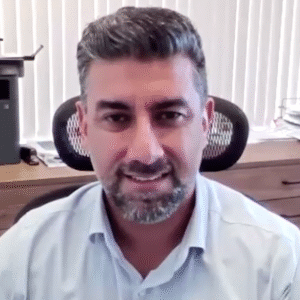
How office buildings must compete on experience with Raka Josan | President & CEO | Josan Properties
Season 7 / Episode 1 / 47:37
In this episode, Raka discusses what tenants are prioritizing today, and how operators can make hospitality more real, even outside the top tier of Class A towers. Raka makes a strong case for the human touch as the core of tenant experience, and explains why the property manager has become the building’s most important ambassador.
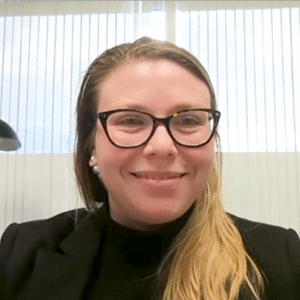
Creating office destinations outside city centers with Faron Brazis | Tenant Engagement Manager | Hobbs Brook Real Estate
Season 6 / Episode 13 / 32:42
In this episode, Faron discusses how suburban office environments are adapting to meet changing tenant expectations, the growing role of hospitality in commercial real estate, and why human connection remains essential even as technology becomes more embedded in buildings.
TEN Season 6 Highlights
On season 6 of the TEN podcast, host David Abrams connected with some exceptional leaders in commercial real estate who are at the forefront of innovation, technology, and delivering a hospitality-inspired customer experience to the workplace. Have a listen to some of our favorite clips.
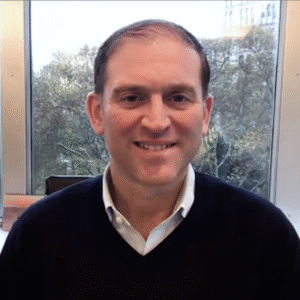
Creating value & enhancing tenant experience with Jonathan Bennett | President | AmTrustRE
Season 6 / Episode 12 / 49:09
In this episode, Jonathan shares how he is helping redefine what success looks like in today’s office market, the importance of differentiating buildings through thoughtful design and curated amenities, and how technology and AI are creating new opportunities to enhance the tenant experience.